

A CP2000 generally proposes changes after IRS information returns do not match the filed return. It is not a bill at the proposal stage and is not the same as a traditional audit, but a complete and timely response is necessary.
Why this question matters
IRS notices are not interchangeable. The notice number, tax period, proposal, deadline, and response instructions determine what should happen next.
The correct response is specific to the taxpayer, tax period, notice, procedural history, and current agency rules. Do not use a general web article as a substitute for reading the actual notice or obtaining advice about a deadline.
A practical framework
1. Compare every listed payer and amount with the return
Start with the record rather than assumptions. Compare every listed payer and amount with the return.
2. Identify duplicates, basis issues, rollovers, nominee income, and corrected forms
Connect each fact to a document and tax period. Identify duplicates, basis issues, rollovers, nominee income, and corrected forms.
3. Compute the correct tax effect rather than accepting gross proceeds as income
Consistency matters across forms, transcripts, and agency communications. Compute the correct tax effect rather than accepting gross proceeds as income.
4. Return the response with supporting schedules and delivery proof
Before submission, check the current form, address, delivery method, and deadline. Return the response with supporting schedules and delivery proof.
Documents to gather
- The complete notice
- The filed return
- Payer statements and corrected forms
- A response reconciliation
Organize copies in chronological order and keep the originals secure. A short index showing the date, source, tax period, and purpose of each item can make agency review more efficient.
Common mistakes
- Agreeing only because a payer name is familiar. This can weaken the factual record, consume a procedural deadline, or lead the agency to evaluate an option that does not fit the case.
- Ignoring cost basis or nontaxable treatment. This can weaken the factual record, consume a procedural deadline, or lead the agency to evaluate an option that does not fit the case.
- Sending documents without a reconciliation table. This can weaken the factual record, consume a procedural deadline, or lead the agency to evaluate an option that does not fit the case.
When legal representation may help
Representation becomes more important when enforcement is active, several years or agencies are involved, the liability is disputed, records are incomplete, a business or third party may be exposed, or statements could have civil or criminal consequences. A sound engagement defines the problem, the work to be performed, who will perform it, the fee terms, and realistic objectives without guaranteeing a result.
Frequently asked questions
Should I amend the return immediately?
The CP2000 instructions and facts determine the response. An amended return is not always the correct first step.
What happens after I respond?
The IRS may accept the explanation, revise the proposal, request more information, or continue toward a formal deficiency process.
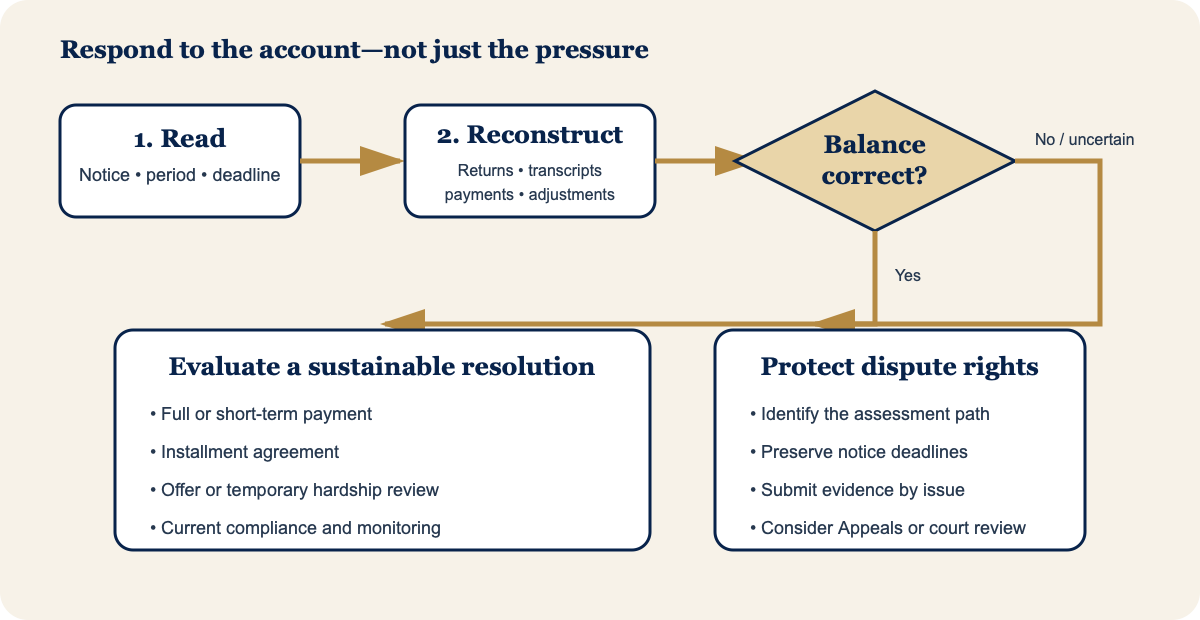
Visual guide
Primary sources
- IRS — IRS Audits
- Taxpayer Advocate Service — Audits in Person
- IRS — Accuracy-Related Penalty
- IRS — Taxpayers Can Appeal an IRS Decision
- IRS — Collection Due Process FAQs
- Taxpayer Advocate Service — Collection Due Process
Sources were accessed for editorial research on 2026-08-12. Agency pages, forms, thresholds, and procedures can change; verify the current version before publication and before acting.
Important notice
This article provides general information, not legal or tax advice. It does not create an attorney-client relationship. Outcomes depend on individual facts and current law.