

Accounting Today notes the following significant changes in the way IRS collects taxes:
1. PRIVATE COLLECTORS. IRS is starting to use a group of four private debt collectors (CBE Group, Conserve, Performat and Pioneer) to collect any tax accounts that the IRS is no longer chasing. In light of the serious problems that IRS has with scams and fraudulent tax returns, the introduction of these private debt collectors is going to create a lot of confusion. Telephone contacts should be preceded by a letter explaining what is going on. 2. PASSPORT CONTROL. The government is restricting passports for people who owe “seriously delinquent tax debt”. In cases where taxpayers owe tax bills of more than $50,000 and have not made arrangements with the IRS to pay, IRS sends a list of tax debtors to the State Department, which restricts passport usage. It is best to deal with your tax problems prior to traveling so you don’t show up at the airport and find out it will take a few months. 3. DELINQUENT RETURNS/OFFERS IN COMPROMISE. In the past IRS has processed offers without all delinquent returns being filed. It changed that procedure and now if an offer is filed with returns outstanding, IRS keeps the 20% down payment and rejects the offer. I don’t understand why anyone would think about filing an offer before filing returns, because as a practical matter unassessed taxes cannot be compromised. 4. UPDATED COLLECTION FINANCIAL STANDARDS. In early April 2017, IRS updated the collection financial standards that it uses to determine a taxpayer’s ability to pay a tax debt. The expense numbers have generally increased. 5. STREAMLINED PAYMENT AGREEMENTS. In October 2016, the IRS piloted a test program to allow taxpayers with balances between $50,000 and $100,000 to enter into streamlined installment agreements with terms of 84 months without filing a financial statement. Liens will still be filed. Have they decided to make this test project permanent? We don’t know yet, but it seems the appropriate procedure for people that fall within the $50,000-$100,000 range and who can make the required monthly payment, is to apply for the streamlined installment agreement and see if the IRS asks for more or enters into the agreement. 6. PAYOFF FIGURES. IRS transcripts are a poor source for payoff amounts because they don’t always display accrued penalties and interests. One way to deal with this is to overpay the account and allow any surplus to be refunded or offset against other outstanding balances. Another way is to call IRS and to endure the wait on line. Also, taxpayers can go online, authenticate their identity and get payoff balances. I favor the slight overpayment approach.
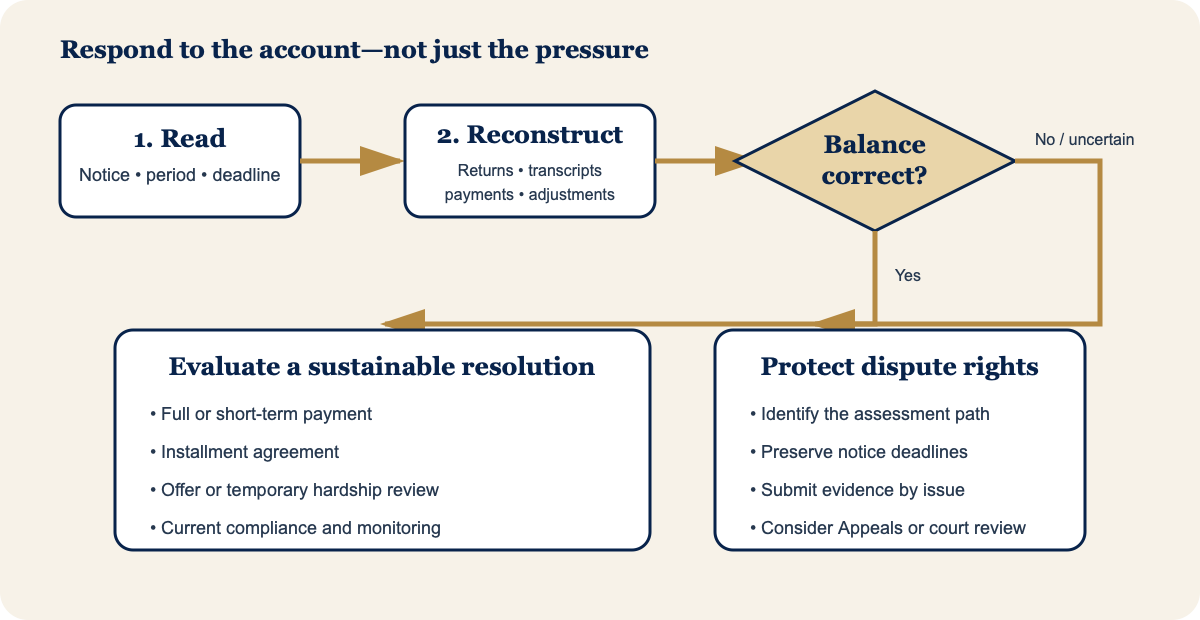
Practical next steps
- Note the date on this article. It describes the rules as they stood then, and tax procedure changes.
- Start from the notice you actually received: the number in the top right corner and the date printed on it decide what is still open to you.
- Pull your account transcripts before deciding anything. They show what the IRS believes about your account, which is not always what the letters say.
- If a deadline is running or the amount is significant, have someone read the file before you respond.
Visual guide
Official sources for current verification
- IRS Topic No. 201 — The Collection Process
- IRS Publication 594 — The IRS Collection Process
- IRS Topic No. 202 — Tax Payment Options
Important notice
This material provides general information, not legal or tax advice. Tax outcomes depend on the facts, procedural history, applicable law, and current agency guidance. Reading this page does not create an attorney-client relationship.